
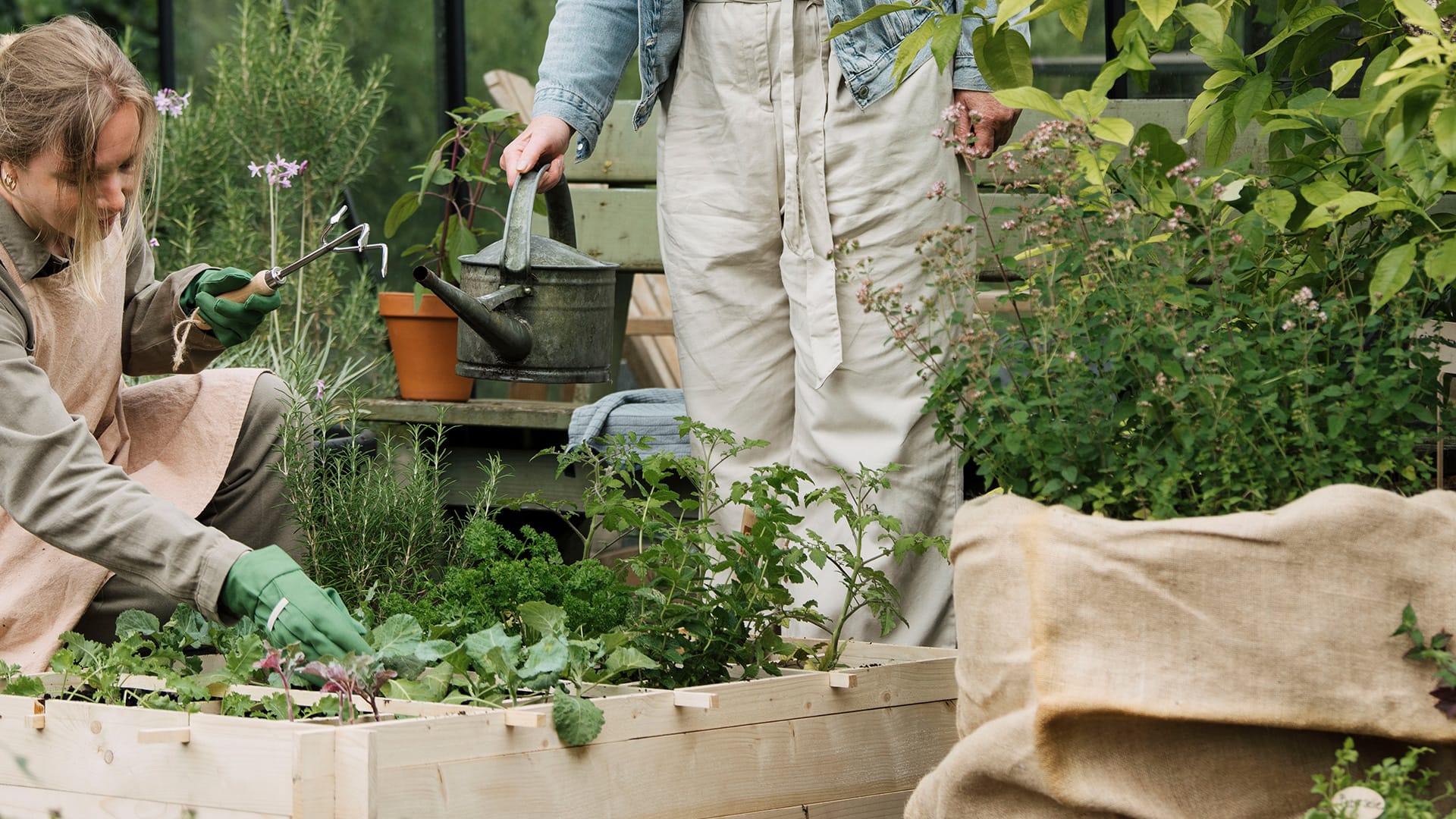
Starting your own sustainable vegetable garden is a relaxing way to grow your own vegetables, fruit and herbs. After a season of harvesting your delicious vegetables, it’s so rewarding that you really won’t be able to do without it. You can grow your own crops in the ground, as we often see, but of course also simply in pots and containers on the patio or balcony. Here are a few handy steps you can follow to start your own vegetable garden.
Sustainable vegetable garden
A sustainable vegetable garden means you can enjoy your garden for several years without having to make major changes every year; the basic setup therefore remains largely the same. This allows you to create a balanced ecosystem in which you do not need to use pesticides. Natural resources, such as beneficial insects, help to resolve any problems that may arise. Avoiding pesticides prevents environmental depletion and ensures that these natural resources remain viable.
The basics of the vegetable garden
Before you simply jump straight into starting a vegetable garden, there are a few things you can take into account beforehand; this will help you lay a solid foundation for your vegetable garden, leading to greater success and, of course, a bigger harvest:
- Healthy soil
- Location and sunlight
- Suitable crops
- Water management
- Biodiversity
Healthy soil
Find out about the composition and quality of your soil. The soil forms the foundation of your vegetable garden, as this is where all the crops you will later sow or plant will naturally grow. Check that water drains away properly (drainage), ensure the soil has a loose texture, and encourage plenty of soil life by adding compost, which also acts as an organic fertiliser. If you find it difficult to assess the quality with the naked eye, you can have a soil test carried out or use a DIY soil test kit.
Location and sunlight
Choose a spot that gets plenty of sun. Most plants prefer a sunny spot, getting around 6–8 hours of sun a day.
And don’t start off too big in the first year; it’s better to expand a little each year. An area of 5–10 m² is more than enough for the first year. Even with just 1 m², you can see if a vegetable garden suits you, and it’s just as rewarding as a larger one.
A vegetable garden in the shade
There are also crops that thrive in areas with less sunlight – often referred to as partial shade – where they receive around four hours of sunlight a day. As there is less sunlight in these areas, photosynthesis is, quite logically, reduced. This means that the plant grows less and, consequently, yields a lower harvest.
Plants that thrive in partial shade include:
- Spinach
- Kale
- Mint
- Parsley
- Radish
- Beetroot
- Garlic
- Lamb’s lettuce
- Cauliflower
- Broccoli
Please note that these crops can tolerate some shade, but they always grow better in a sunny spot in the vegetable garden.
Suitable crops
Choose crops that you eat regularly to make the most of your soil. Start with basic crops that are quick to harvest and almost impossible to get wrong, so that you can build up a track record of success and gain confidence. Recommended basic crops include:
- Radishes
- Strawberries
- Herbs
- Pumpkins
- Courgette
- Green peas
- Lettuce
- Spinach
- Rocket
Water management
Healthy soil, sunlight and water are essential for plant growth. As you are working with annual plants in a vegetable garden, you will need to water them more often than in a standard garden. Young plants have smaller, shallow roots, and water on the surface evaporates more quickly. In spring, water about once a week, and every two days during the hot summer. A soaker hose can help with this.
Annuals are plants that you grow, harvest and then remove from the garden within a year.
Biodiversity
Encourage biodiversity in your vegetable garden by attracting insects. Not only is this good for the environment, but these little creatures will also help you get rid of pests and fertilise your crops.
With these basic steps, you’re well on your way to a successful vegetable garden. Good luck and have fun.